
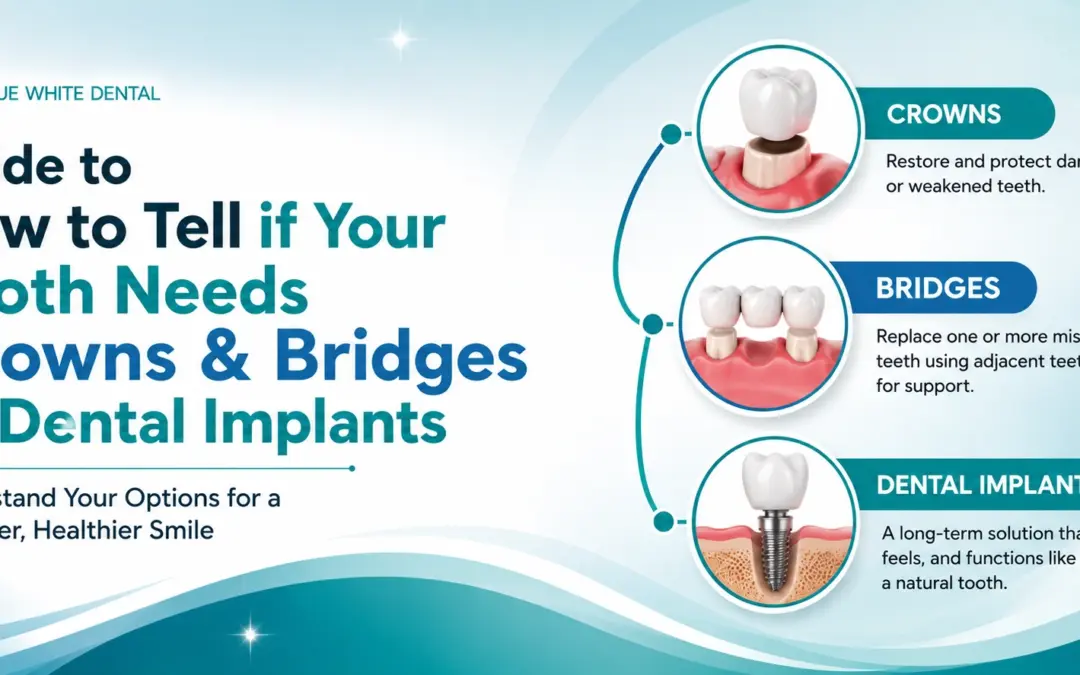
Missing or severely damaged teeth can affect more than just your appearance. They can make eating uncomfortable, alter your speech, affect your bite, and gradually impact your overall oral health. The good news is that modern dentistry offers several reliable ways to restore your smile. At True White Dental, Kondapur, patients have access to advanced tooth replacement options tailored to their unique needs.
Two of the most common solutions are crowns and bridges, as well as dental implants. While both treatments are designed to restore function and aesthetics, they serve different purposes and are recommended in different situations.
Not sure whether a crown, bridge, or implant is right for you? Schedule a comprehensive dental evaluation to explore the best option for restoring your smile.
Understanding the Difference Between Crowns, Bridges, and Dental Implants
Before deciding which treatment is right for you, it’s important to understand how these restorations work.
Dental Crowns
A dental crown is a custom-made cap that covers a damaged or weakened tooth. It protects the remaining tooth structure while restoring its shape, strength, and appearance.
Crowns are commonly used after large cavities, root canal treatment, fractures, or significant tooth wear. In some cases, early treatment with dental fillings can prevent damage from progressing to the point where a crown becomes necessary.
Dental Bridges
A dental bridge is used when one or more teeth are missing. The replacement tooth is anchored to the healthy teeth on either side of the gap.
A bridge restores chewing ability, improves appearance, and prevents neighbouring teeth from shifting.
Dental Implants
A dental implant is an artificial tooth root placed into the jawbone. After healing, a crown is attached to create a natural-looking replacement tooth.
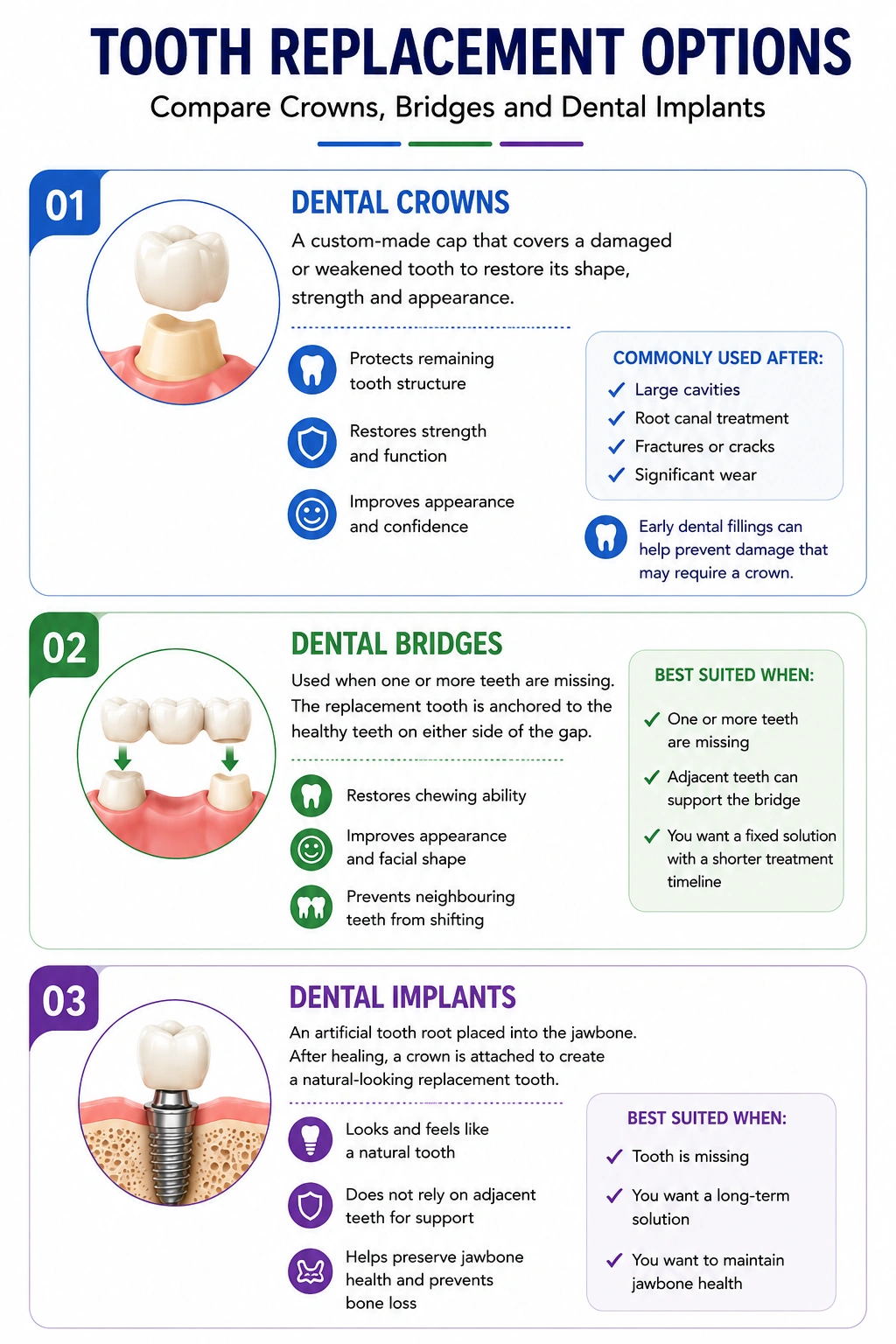
Dental Crowns
A dental crown is a custom-made cap that covers a damaged or weakened tooth. It protects the remaining tooth structure while restoring its shape, strength, and appearance.
Crowns are commonly used after large cavities, root canal treatment, fractures, or significant tooth wear. In some cases, early treatment with dental fillings can prevent damage from progressing to the point where a crown becomes necessary.
Dental Bridges
A dental bridge is used when one or more teeth are missing. The replacement tooth is anchored to the healthy teeth on either side of the gap.
A bridge restores chewing ability, improves appearance, and prevents neighbouring teeth from shifting.
Dental Implants
A dental implant is an artificial tooth root placed into the jawbone. After healing, a crown is attached to create a natural-looking replacement tooth.
Unlike bridges, implants do not rely on adjacent teeth for support and help preserve jawbone health.
Signs Your Tooth May Need a Crown Instead of an Implant
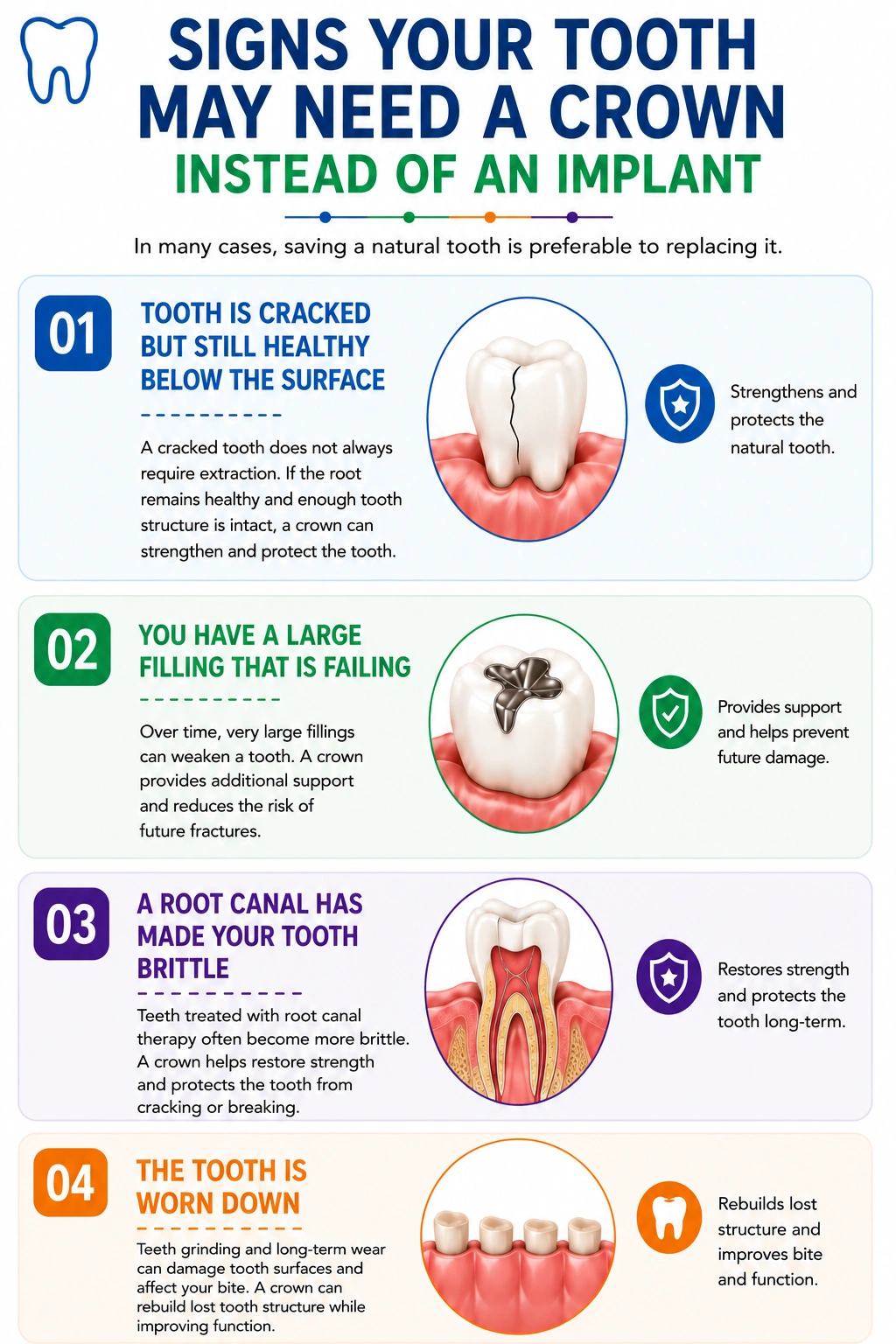
In many cases, saving a natural tooth is preferable to replacing it.
You may be a candidate for a dental crown if:
The Tooth Is Cracked but Still Healthy Below the Surface
A cracked tooth does not always require extraction. If the root remains healthy and enough tooth structure is intact, a crown can strengthen and protect the tooth.
You Have a Large Filling That Is Failing
Over time, very large fillings can weaken a tooth. A crown provides additional support and reduces the risk of future fractures.
A Root Canal Has Made Your Tooth Brittle
Teeth treated with root canal therapy often become more brittle. A crown helps restore strength and functionality.
The Tooth Is Worn Down
Teeth grinding and long-term wear can damage tooth surfaces and affect your bite. A crown can rebuild lost tooth structure while improving function.
When Does a Missing Tooth Need a Bridge?
A bridge may be recommended when:
One Tooth Is Missing
Bridges are commonly used to replace a single missing tooth, particularly when neighbouring teeth already need crowns.
Two or Three Teeth in a Row Are Missing
Bridges can also replace two or three adjacent missing teeth, as long as there are healthy or restorable teeth on either side of the gap to support the bridge.
Adjacent Teeth Have Existing Damage
If the teeth next to the gap already contain large fillings or restorations, placing crowns on those teeth as part of a bridge may be a practical solution.
You Want a Fixed Restoration With a Shorter Treatment Timeline
Bridges often require fewer treatment stages than implants, making them a suitable option in certain situations.
Patients considering fixed tooth replacement options often explore both crowns and bridges and dental implants before making a decision.
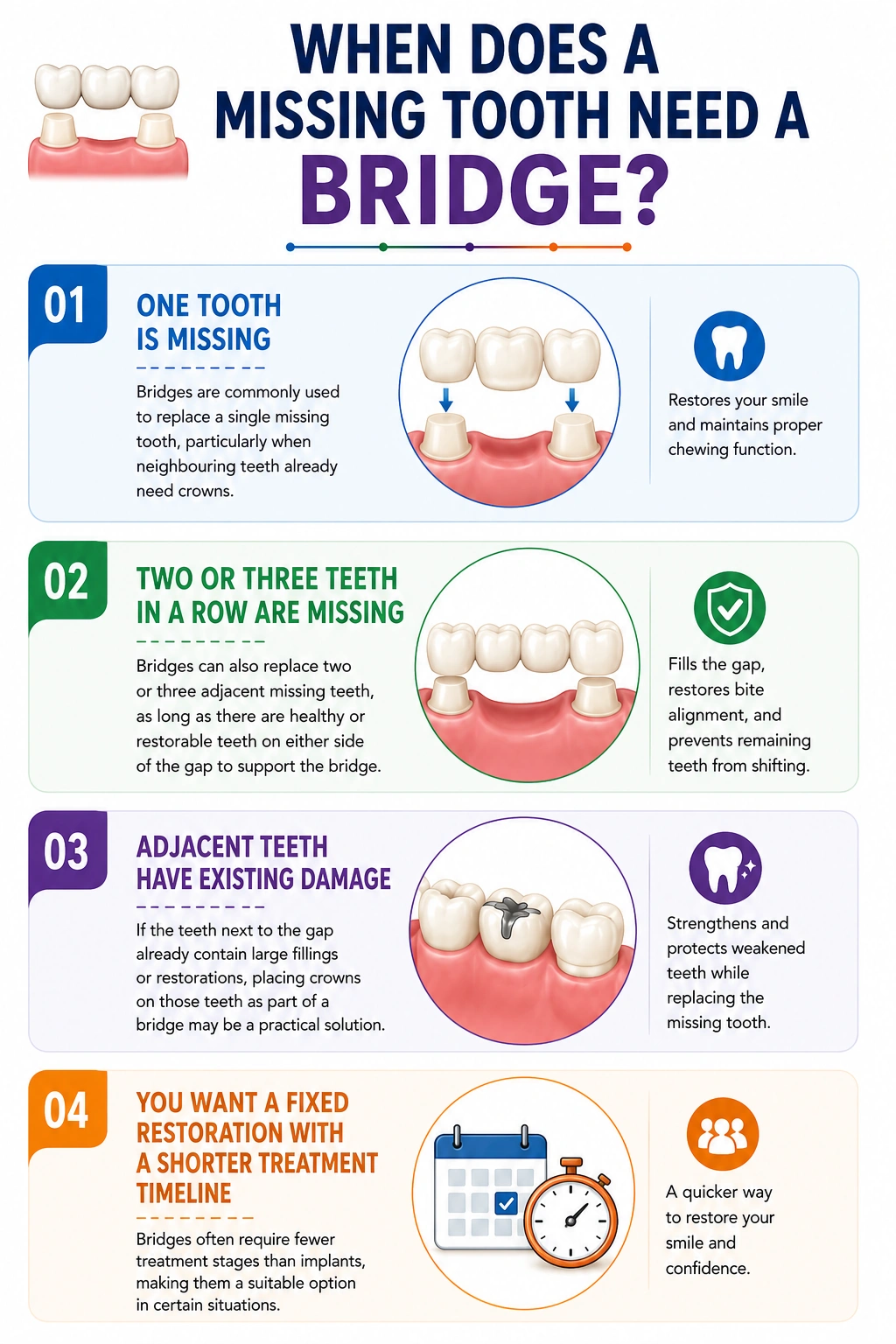
A bridge may be recommended when:
One Tooth Is Missing
Bridges are commonly used to replace a single missing tooth, particularly when neighbouring teeth already need crowns.
Two or Three Teeth in a Row Are Missing
Bridges can also replace two or three adjacent missing teeth, as long as there are healthy or restorable teeth on either side of the gap to support the bridge.
Adjacent Teeth Have Existing Damage
If the teeth next to the gap already contain large fillings or restorations, placing crowns on those teeth as part of a bridge may be a practical solution.
You Want a Fixed Restoration With a Shorter Treatment Timeline
Bridges often require fewer treatment stages than implants, making them a suitable option in certain situations.
Patients considering fixed tooth replacement options often explore both crowns and bridges and dental implants before making a decision.
How to Know If You Are a Good Candidate for Dental Implants
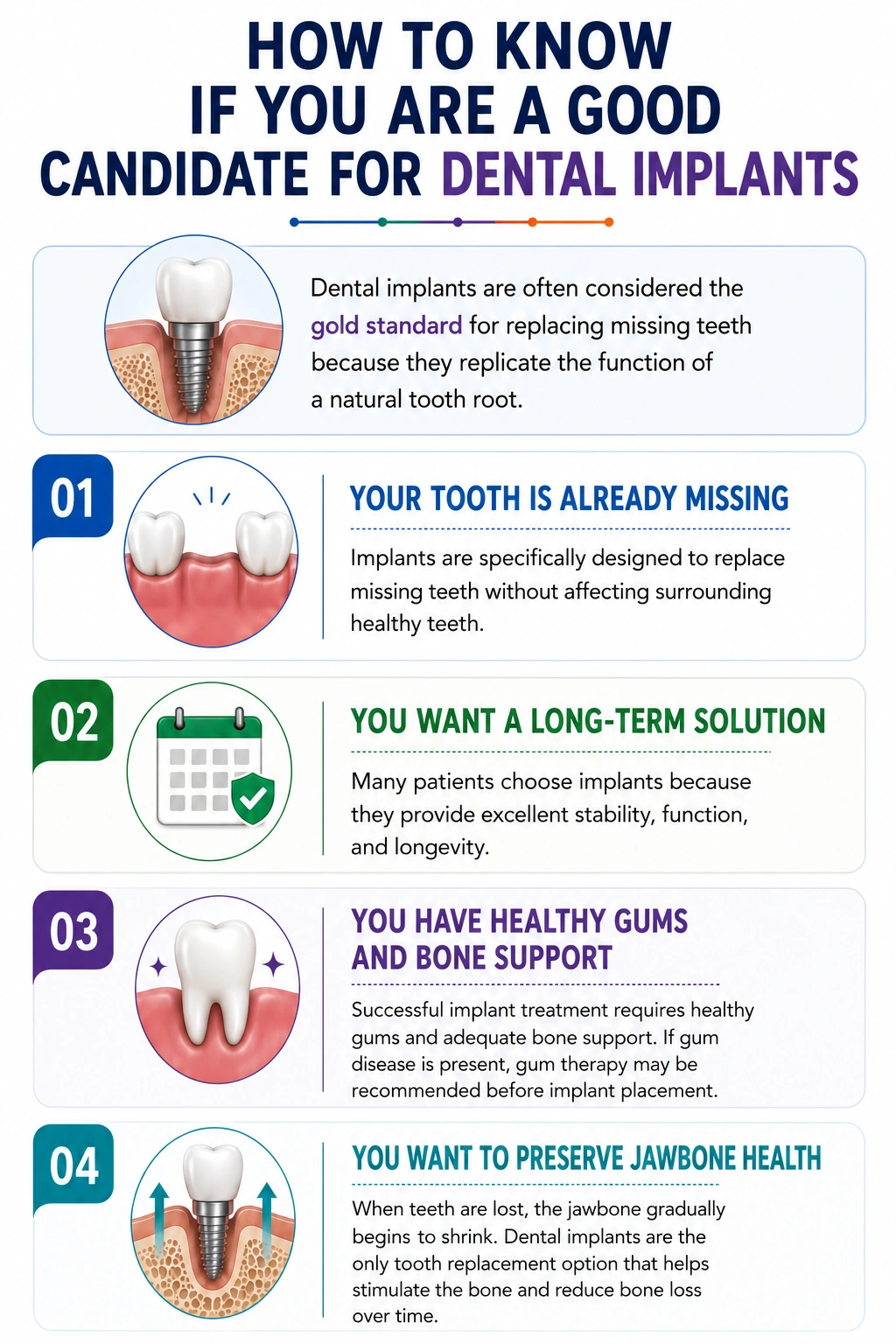
Dental implants are often considered the gold standard for replacing missing teeth because they replicate the function of a natural tooth root.
You may be a good implant candidate if:
Your Tooth Is Already Missing
Implants are specifically designed to replace missing teeth without affecting surrounding healthy teeth.
You Want a Long-Term Solution
Many patients choose implants because they provide excellent stability, function, and longevity.
You Have Healthy Gums and Bone Support
Successful implant treatment requires healthy gums and adequate bone support.
If gum disease is present, gum therapy may be recommended before implant placement.
You Want to Preserve Jawbone Health
When teeth are lost, the jawbone gradually begins to shrink.
Dental implants are the only tooth replacement option that helps stimulate the bone and reduce bone loss over time.
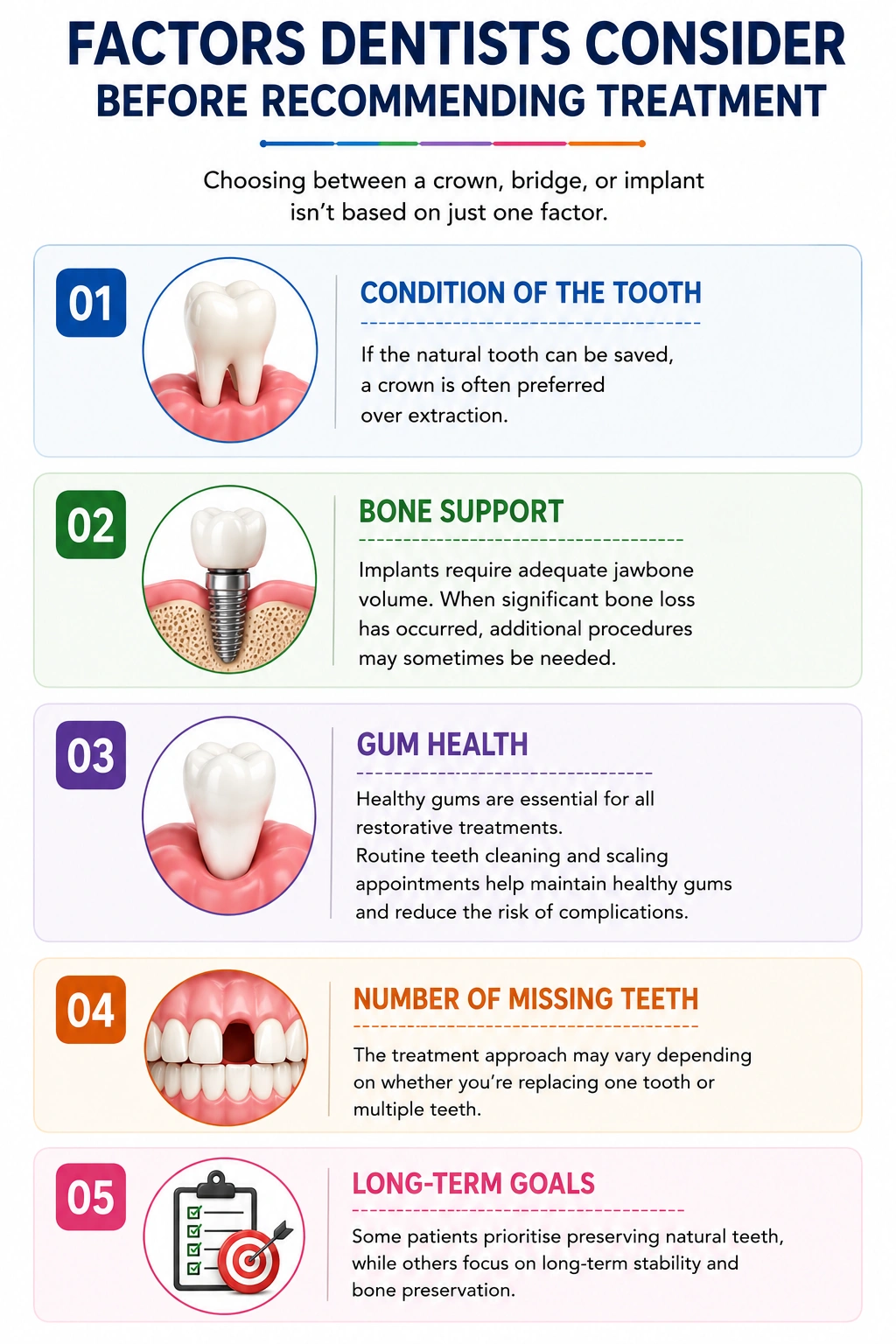
Factors Dentists Consider Before Recommending Treatment
Choosing between a crown, bridge, or implant isn’t based on just one factor.
Condition of the Tooth
If the natural tooth can be saved, a crown is often preferred over extraction.
Bone Support
Implants require adequate jawbone volume. When significant bone loss has occurred, additional procedures may sometimes be needed.
Gum Health
Healthy gums are essential for all restorative treatments.
Routine teeth cleaning and scaling appointments help maintain healthy gums and reduce the risk of complications.
Number of Missing Teeth
The treatment approach may vary depending on whether you’re replacing one tooth or multiple teeth.
Long-Term Goals
Some patients prioritise preserving natural teeth, while others focus on long-term stability and bone preservation.
Choosing between a crown, bridge, or implant isn’t based on just one factor.
Condition of the Tooth
If the natural tooth can be saved, a crown is often preferred over extraction.
Bone Support
Implants require adequate jawbone volume. When significant bone loss has occurred, additional procedures may sometimes be needed.
Gum Health
Healthy gums are essential for all restorative treatments.
Routine teeth cleaning and scaling appointments help maintain healthy gums and reduce the risk of complications.
Number of Missing Teeth
The treatment approach may vary depending on whether you’re replacing one tooth or multiple teeth.
Long-Term Goals
Some patients prioritise preserving natural teeth, while others focus on long-term stability and bone preservation.
Can a Tooth Be Saved Instead of Replaced?
One of the most common questions patients ask is whether extraction can be avoided. In many situations, teeth that are cracked, worn, or heavily restored can still be preserved with modern dental treatments.
According to Dr. Medasani Roshny, preserving the natural tooth is often the preferred approach whenever it can provide long-term function and stability. However, if extensive decay, infection, or structural damage makes the tooth non-restorable, tooth extraction followed by a bridge or implant may be the better option.
A thorough examination and digital imaging help determine whether saving the tooth is possible.
Why Early Treatment Matters
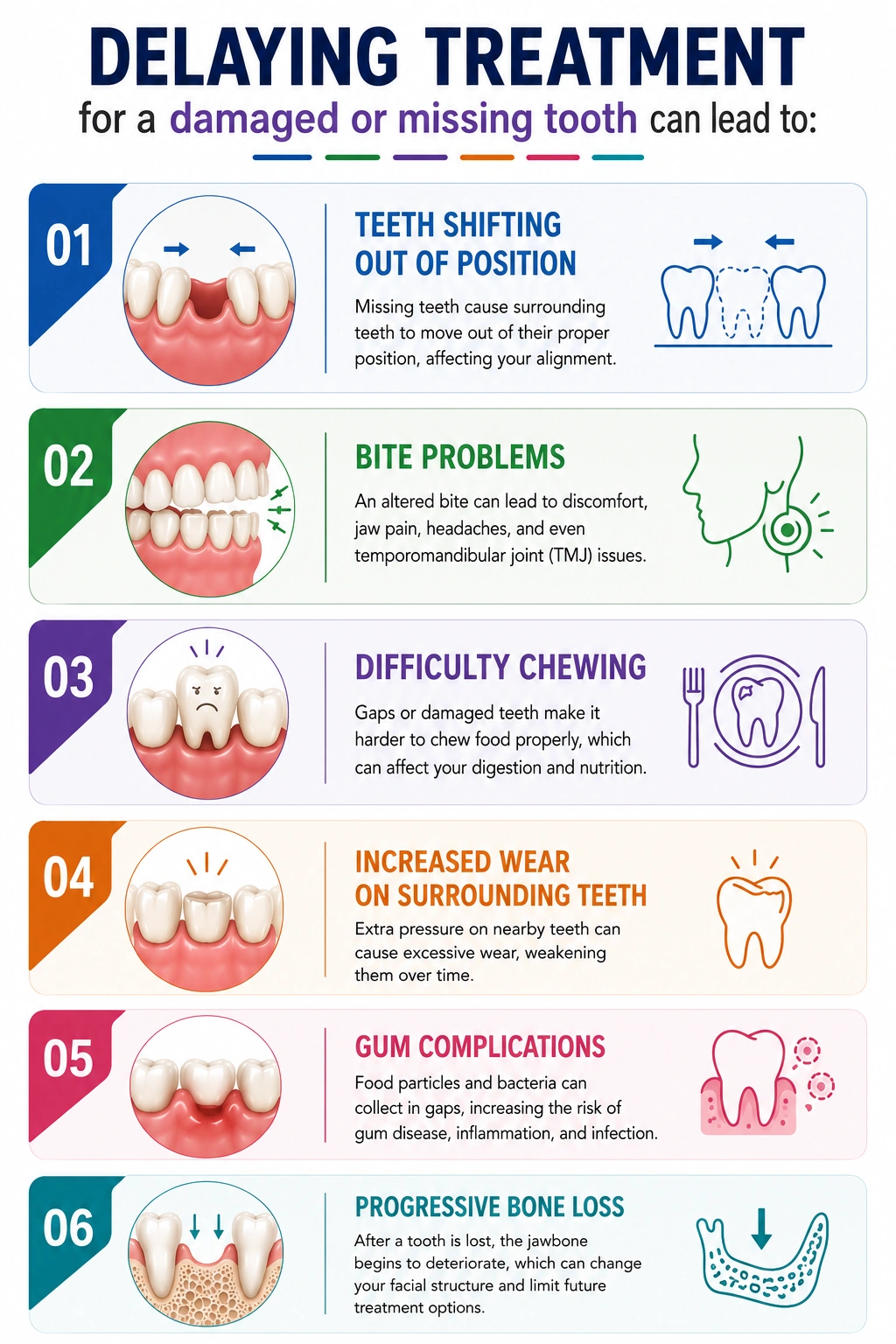
Delaying treatment for a damaged or missing tooth can lead to:
- Teeth shifting out of position
- Bite problems
- Difficulty chewing
- Increased wear on surrounding teeth
- Gum complications
- Progressive bone loss
Seeking treatment early often provides more restorative options and better long-term outcomes.
Which Option Is Best for You?
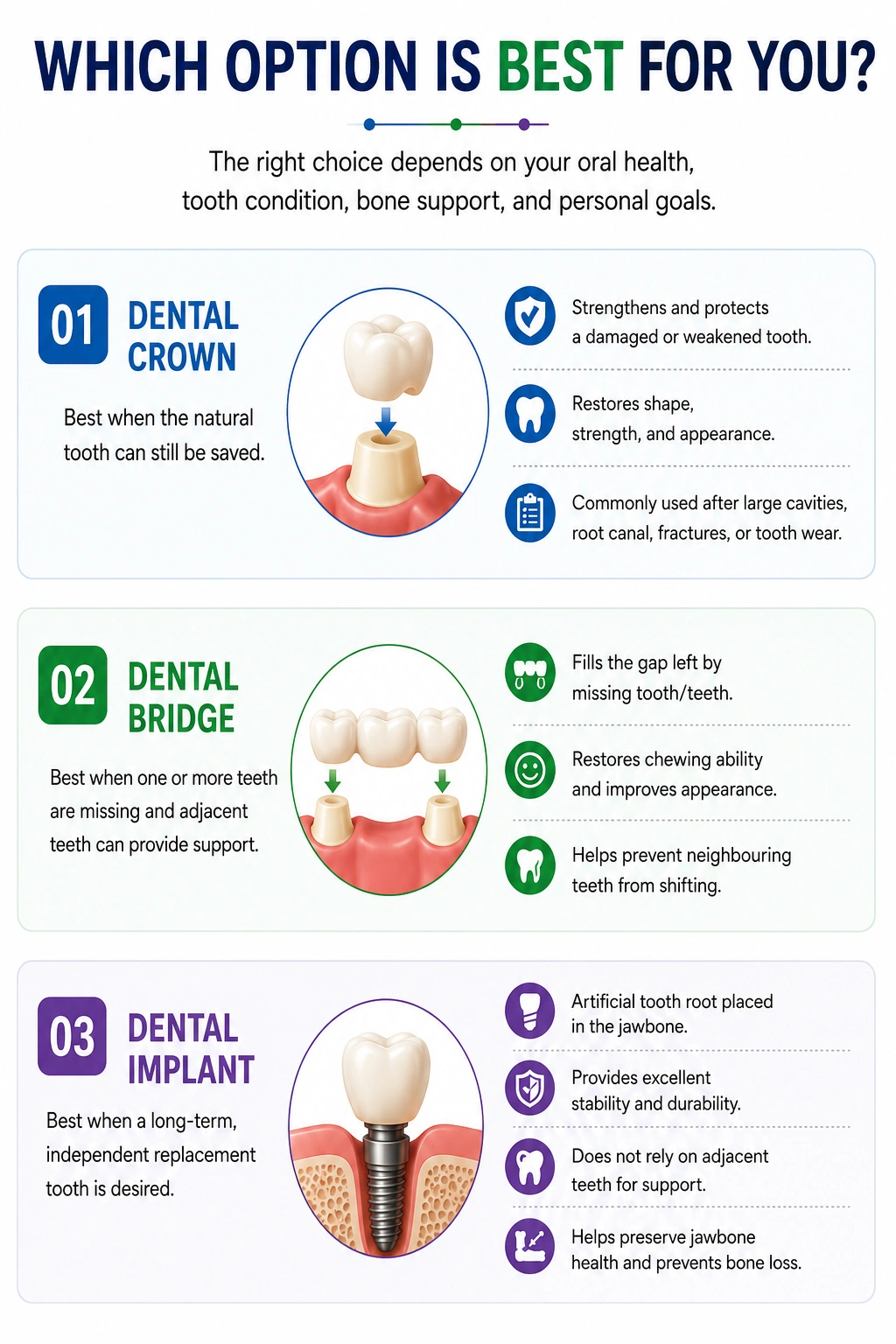
The answer depends on your individual oral health, tooth condition, bone support, and personal goals.
In general:
- A crown is suitable when the tooth can still be saved.
- A bridge works well when a tooth is missing and neighbouring teeth can provide support.
- A dental implant is often recommended when a long-term, independent replacement tooth is desired.
The best way to determine the right treatment is through a professional dental evaluation.
Choosing the right treatment depends on your oral health, tooth condition, and long-term goals. To learn more about dental crowns and tooth bridges, explore this guide from Colgate.
The answer depends on your individual oral health, tooth condition, bone support, and personal goals.
In general:
- A crown is suitable when the tooth can still be saved.
- A bridge works well when a tooth is missing and neighbouring teeth can provide support.
- A dental implant is often recommended when a long-term, independent replacement tooth is desired.
The best way to determine the right treatment is through a professional dental evaluation.
Choosing the right treatment depends on your oral health, tooth condition, and long-term goals. To learn more about dental crowns and tooth bridges, explore this guide from Colgate.
Take the first step towards replacing damaged or missing teeth with a treatment plan designed for you.
Frequently Asked Questions
How do I know if my tooth needs a crown or an implant?
If the natural tooth can be preserved, a crown is often the preferred option. Implants are generally recommended when the tooth is missing or cannot be saved.
Is a bridge better than an implant?
Both treatments offer excellent results. The right choice depends on your oral health, jawbone condition, and treatment goals.
Can a cracked tooth be saved with a crown?
In many cases, yes. If enough healthy tooth structure remains, a crown can strengthen and protect the tooth.
Do dental implants look natural?
Yes. Modern implant restorations are designed to closely match the appearance of natural teeth.
How long do crowns and dental implants last?
Both can provide long-lasting results when supported by good oral hygiene and regular dental check-ups.
Can gum disease affect dental implant treatment?
Yes. Existing gum disease may need treatment through gum therapy before implant placement can be considered.