

Dentures in Kondapur, Hyderabad
Home » Dentures
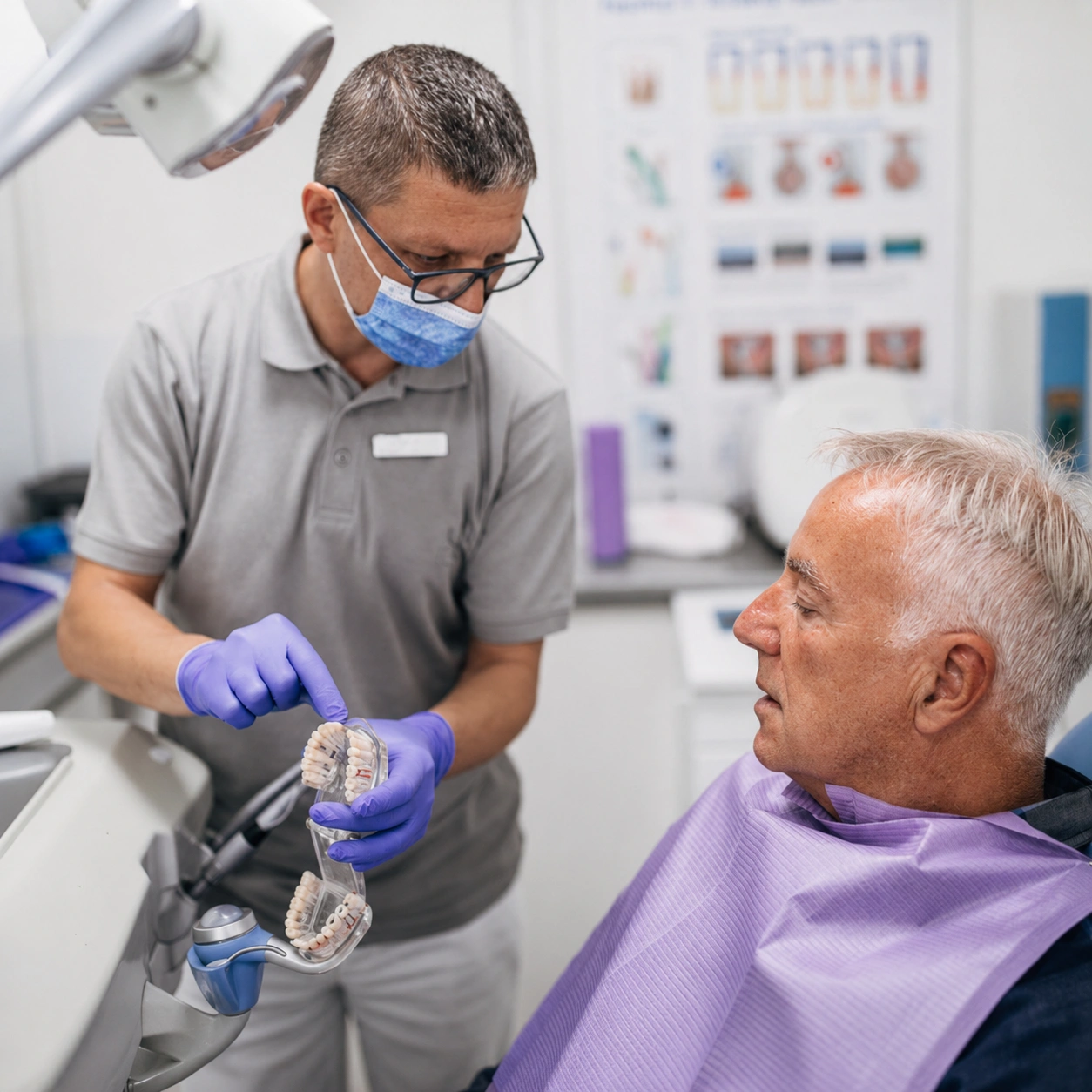
Dentures are custom-made, removable tooth replacements designed for people who have lost several teeth or all teeth in the upper or lower jaw. They help restore chewing ability, speech clarity, facial support, and smile appearance. Depending on your oral condition, dentures may be made as complete dentures when all teeth are missing, or partial dentures when some natural teeth are still present.
At True White Dental in Kondapur, dentures are planned with attention to fit, comfort, gum health, and natural appearance. The goal is not just to replace missing teeth, but to help you eat, speak, and smile with better confidence. Every denture is customised after a detailed dental evaluation, so the final result feels stable, comfortable, and easy to maintain.
If these signs are familiar, a dental consultation can help decide whether complete dentures, partial dentures, implant-supported dentures, or another replacement option would suit you better.
You may need dentures if you notice:
- Difficulty chewing food properly.
- Missing teeth affecting your smile or confidence.
- Loose or mobile teeth due to gum problems.
- Pain or discomfort while biting because only a few teeth are carrying pressure.
- Teeth shifting into empty spaces.
- Change in speech after losing teeth.
- Gums feel sore under old or loose dentures.
- A denture that slips while speaking or eating.
- Visible facial sagging due to long-term tooth loss.
- Avoiding certain foods because chewing has become uncomfortable.
Dentures offer practical and aesthetic benefits when they are planned well:
- Restore chewing comfort for everyday meals.
- Improve speech clarity affected by missing teeth.
- Support lips and cheeks for a fuller facial appearance.
- Replace multiple missing teeth with one customised appliance.
- Improve smile appearance in a natural-looking way.
- Help distribute bite pressure more evenly.
- Offer a removable option for patients who are not ready for fixed treatment.
- Can be adjusted, relined, or replaced as the mouth changes over time.
- Support better oral function while keeping treatment accessible.
- Help patients regain confidence in social and professional settings.
The Denture Journey at True White Dental — Step by Step
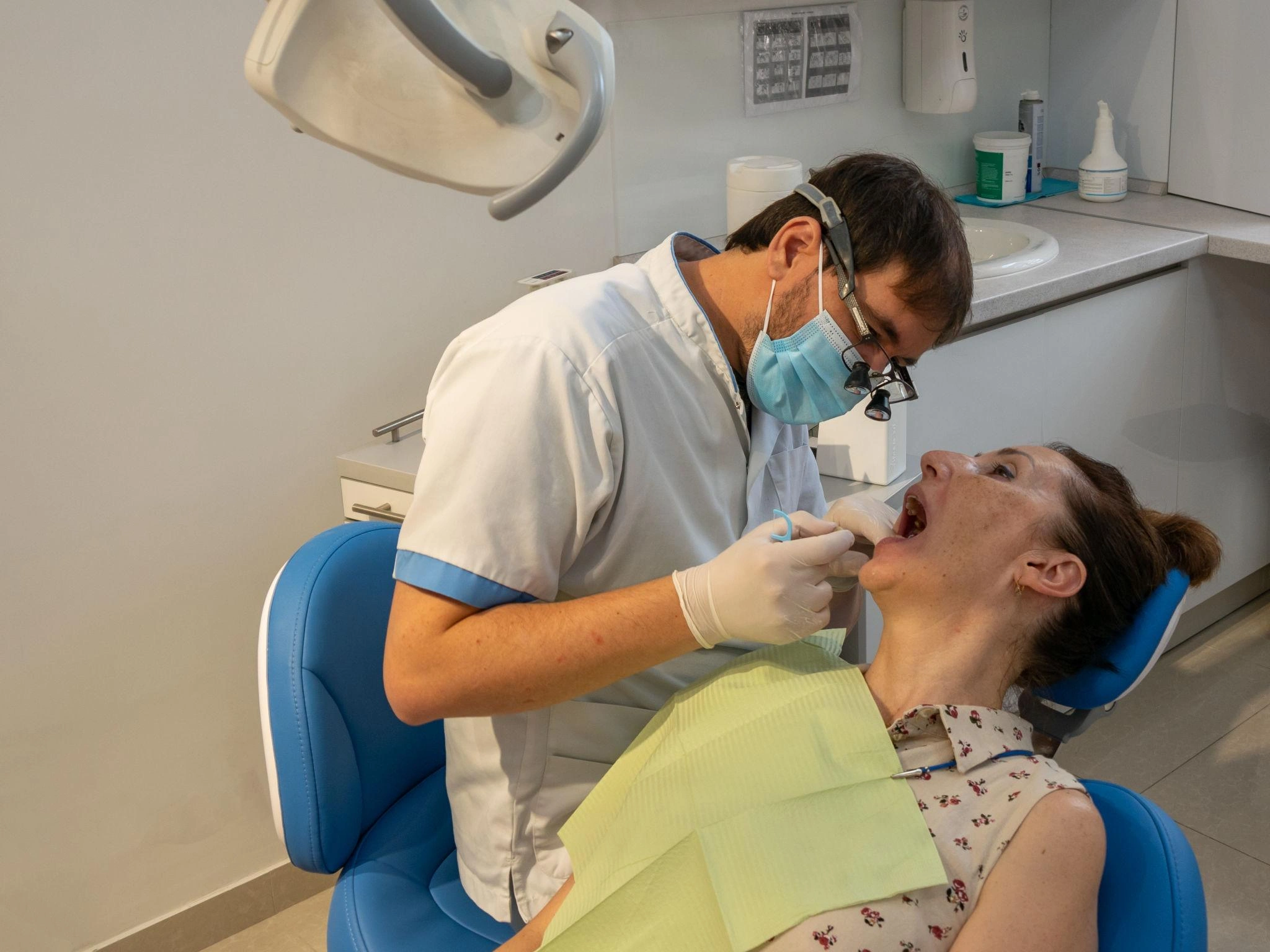
Step 1 — Consultation & Oral Health Check-Up
The dentist examines your mouth, gums, jaw shape, and remaining teeth. Your chewing concerns, smile expectations, and comfort issues are also discussed before planning begins.
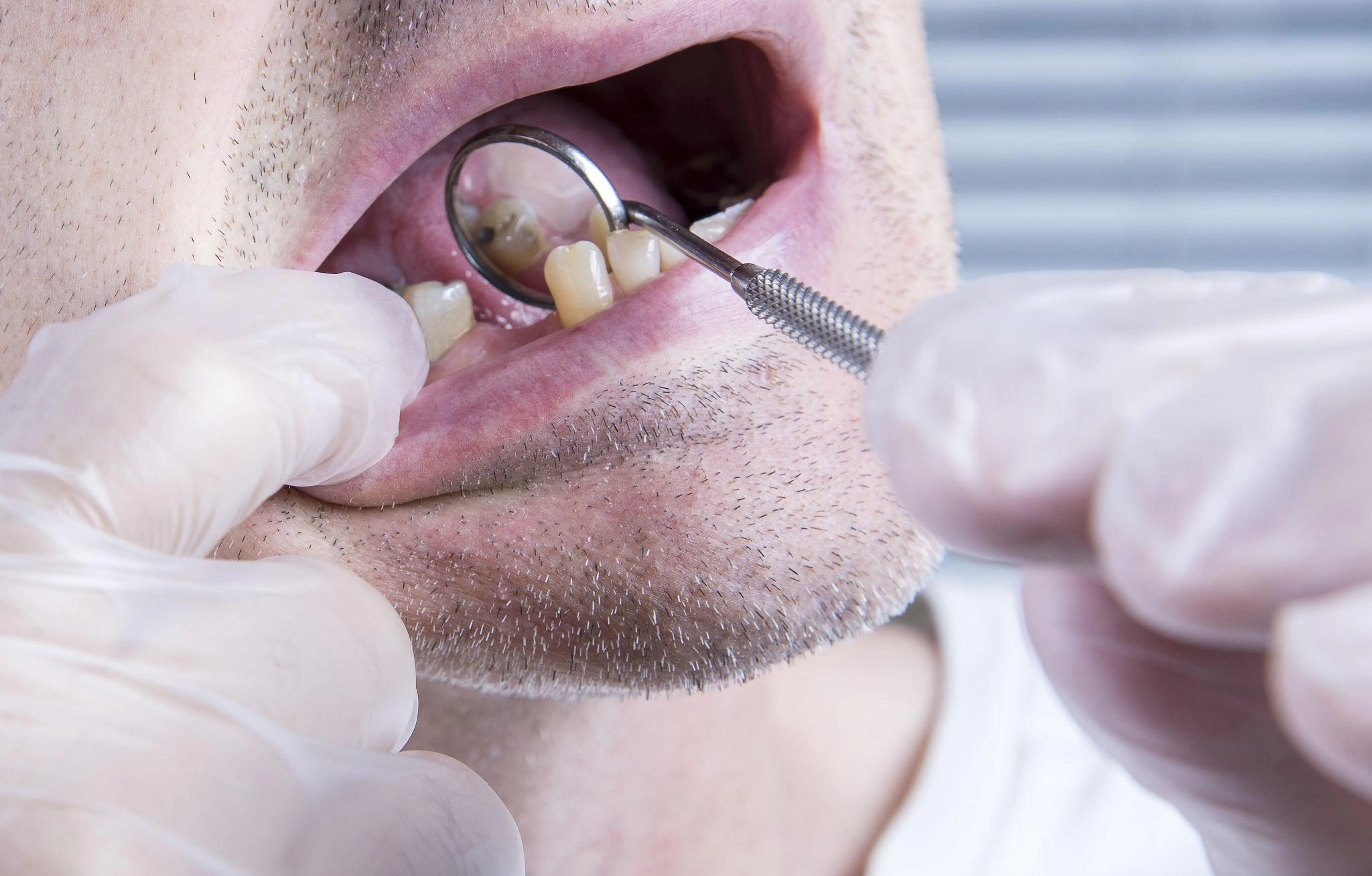
Step 2 — Evaluation of Missing Teeth and Gum Support
The dentist checks whether you need a complete denture, a partial denture, or another replacement option. Gum health, bone support, and bite balance are assessed carefully.

Step 3 — Clear Explanation of Denture Options
You are guided through the available denture types, expected comfort, appearance, maintenance needs, and cost factors in simple language. If a fixed option may be better, it is also explained clearly.

Step 4 — Impressions and Bite Recording
Accurate impressions are taken so the denture can be customised to your mouth. Bite measurements help ensure the upper and lower teeth meet comfortably.
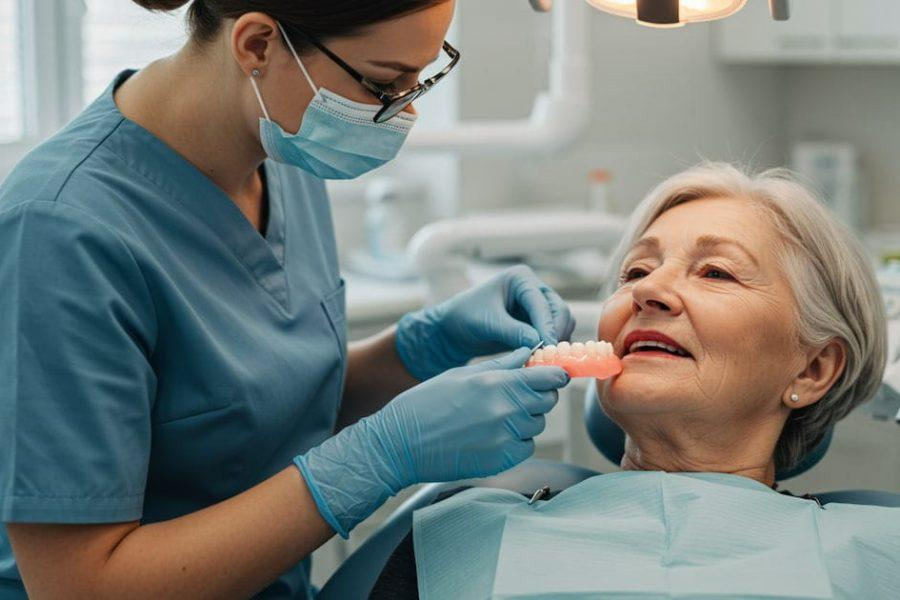
Step 5 — Trial Denture Evaluation
A trial setup may be used to check tooth position, bite, smile line, and basic comfort before the final denture is made. This step helps improve the final fit and appearance.
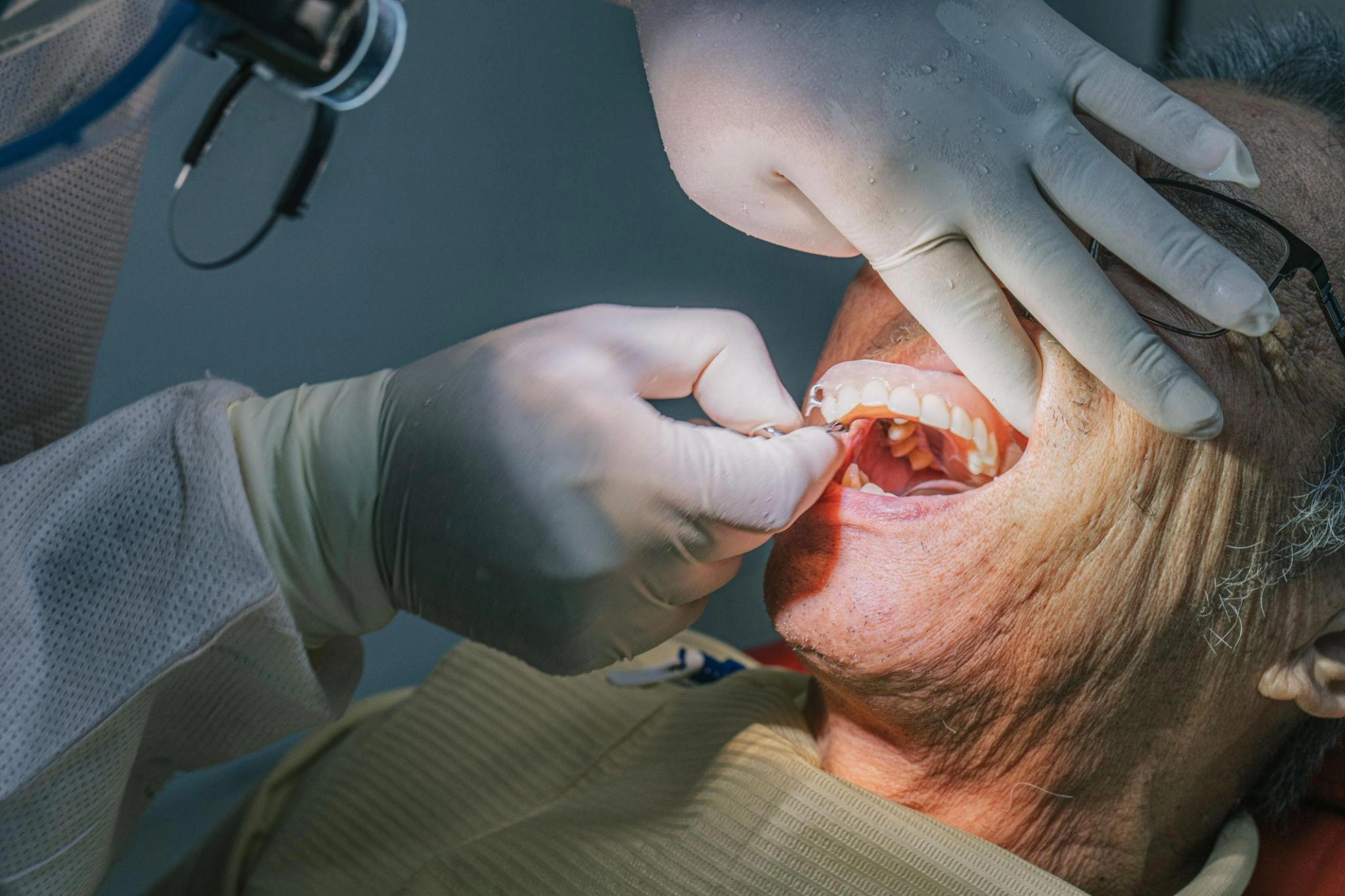
Step 6 — Final Denture Placement
The final denture is placed and checked for fit, stability, bite comfort, and appearance. Small adjustments may be made to reduce pressure points.
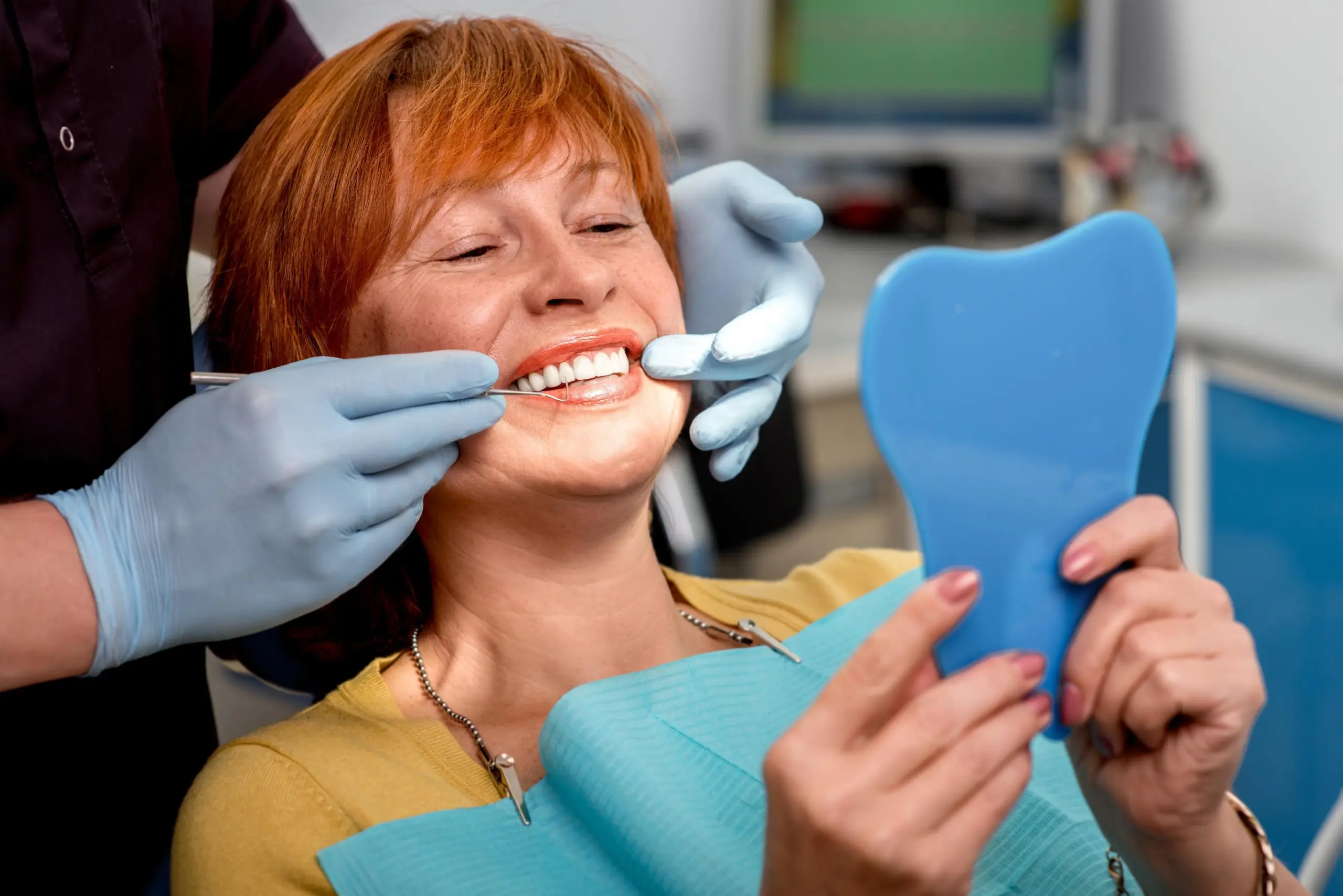
Step 6 — Follow-Up and Adjustments
Dentures often need minor fine-tuning after placement because the gums and muscles take time to adapt. Follow-up visits help improve comfort and long-term wear.
Advanced Denture Planning and Materials Used
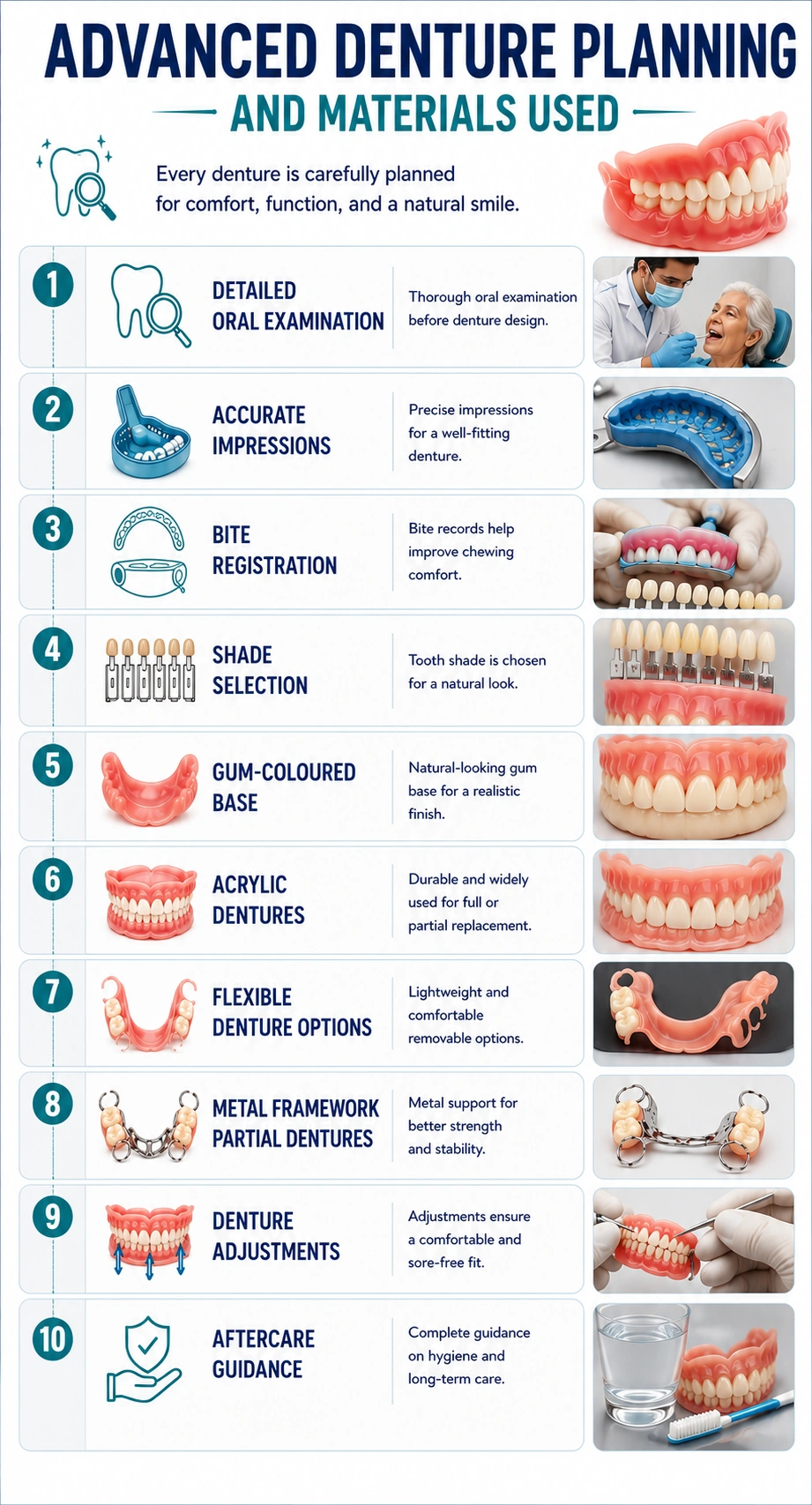
Dentures are not one-size-fits-all. The right material and design depend on the number of missing teeth, gum support, bite pressure, aesthetics, and budget. At True White Dental, denture planning may include:
Detailed oral examination before denture design.
Aurate impressions for better fit.
Bite registration to improve chewing comfort.
Shade selection for natural-looking teeth.
Gum-coloured denture base for a more realistic appearance.
Acrylic dentures for complete or partial tooth replacement.
Flexible denture options were suitable.
Metal framework partial dentures in selected cases.
Denture adjustments to reduce sore spots.
Hygiene and maintenance guidance after placement.
Types of Dentures Available
| Type of Denture | Best Used For |
| Complete Dentures | Suitable when all teeth are missing in the upper jaw, lower jaw, or both. |
| Partial Dentures | Used when some natural teeth remain, and the missing spaces need to be filled. |
| Flexible Dentures | A removable option that may feel lighter and more comfortable in selected cases. |
| Acrylic Dentures | Commonly used removable dentures that can replace multiple or all missing teeth. |
| Cast Partial Dentures | Metal-framework dentures that may offer better support and durability in suitable cases. |
| Implant-Supported Dentures | Dentures supported by implants for improved stability when clinically appropriate. |
Denture Cost in Hyderabad
The cost of dentures depends on your individual treatment needs. It is best confirmed after a dental consultation because every mouth is different.
Factors that affect denture cost include:
Complete denture or partial denture requirement.
Number of missing teeth.
Material selected.
Gum and bone condition.
Need for tooth extraction before denture placement.
Need for additional dental cleaning or gum care.
Type of denture design.
Number of visits and adjustments required.
Whether implant support is being considered.
At True White Dental, the dentist explains the suitable denture option, treatment steps, and cost estimate before starting the procedure, so patients can make an informed decision.
Why Choose True White Dental for Dentures in Kondapur?
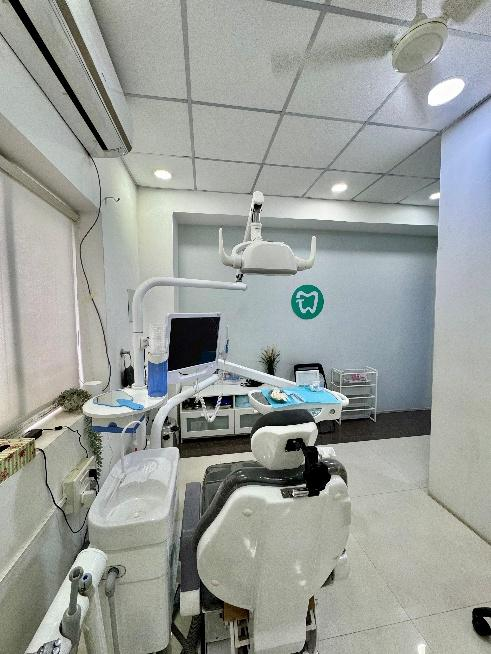
Aftercare at True White Dental: What to Expect After Denture Placement
A new denture may take some time to feel natural. Mild pressure, increased saliva, or slight difficulty speaking can happen in the first few days, but most patients adapt gradually with proper guidance.
To care for your dentures:
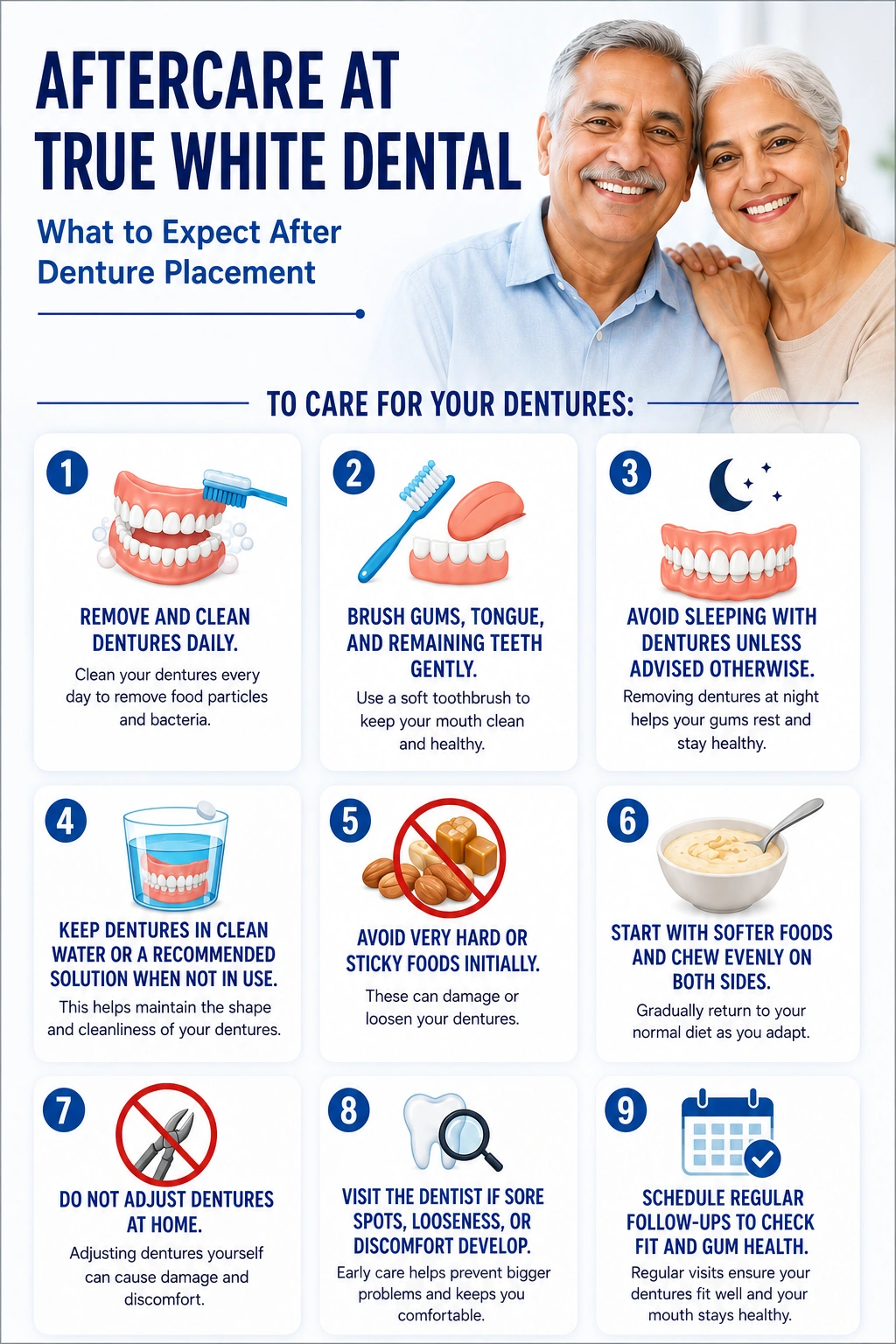
Remove and clean dentures daily.
Brush the gums, tongue, and remaining teeth gently.
Avoid sleeping with dentures unless advised otherwise.
Keep dentures in clean water or a recommended solution when not in use.
Avoid very hard or sticky foods initially.
Start with softer foods and chew evenly on both sides.
Do not adjust dentures at home.
Visit the dentist if sore spots, looseness, or discomfort develop.
Schedule regular follow-ups to check fit and gum health.
Frequently Asked Questions (FAQs)
Q1. Are dentures removable?
Yes. Most dentures are removable and can be taken out for cleaning and maintenance. Depending on your oral condition, your dentist may also discuss implant-supported denture options for improved stability.
Q2. How long does it take to get used to dentures?
Most patients adjust within a few weeks, though speaking and eating may feel different during the first several days.
Q3. How often should dentures be replaced?
Dentures generally need replacement or relining every five to seven years as the mouth’s shape changes over time.
Q4. Can I eat normally with dentures?
Dentures help restore chewing function, but it is advisable to begin with softer foods and gradually return to a regular diet. Very hard or sticky foods may still require caution.
Q5. How do I care for my dentures?
Clean your dentures daily, remove them before sleeping unless advised otherwise, store them properly when not in use, and attend regular dental check-ups to ensure they remain comfortable and functional.
Are dentures available for a single missing tooth?
Yes, partial dentures can be made for one or a few missing teeth, alongside options like bridges or implants.
