
Most patients delay scheduling scaling for fear of one common myth, which is that it wears away enamel, loosens teeth, or causes teeth to become sensitive. However, this myth prevents patients from undergoing a procedure that is indeed one of the easiest methods of securing good oral health.
At True White Dental, Kondapur, we get this question asked by many patients, and our answer is always quite simple. Scaling is healthy for your teeth if done properly by a professional dentist. The myths regarding scaling mainly stem from misconceptions about the procedure.
What Does Dental Scaling Actually Do?
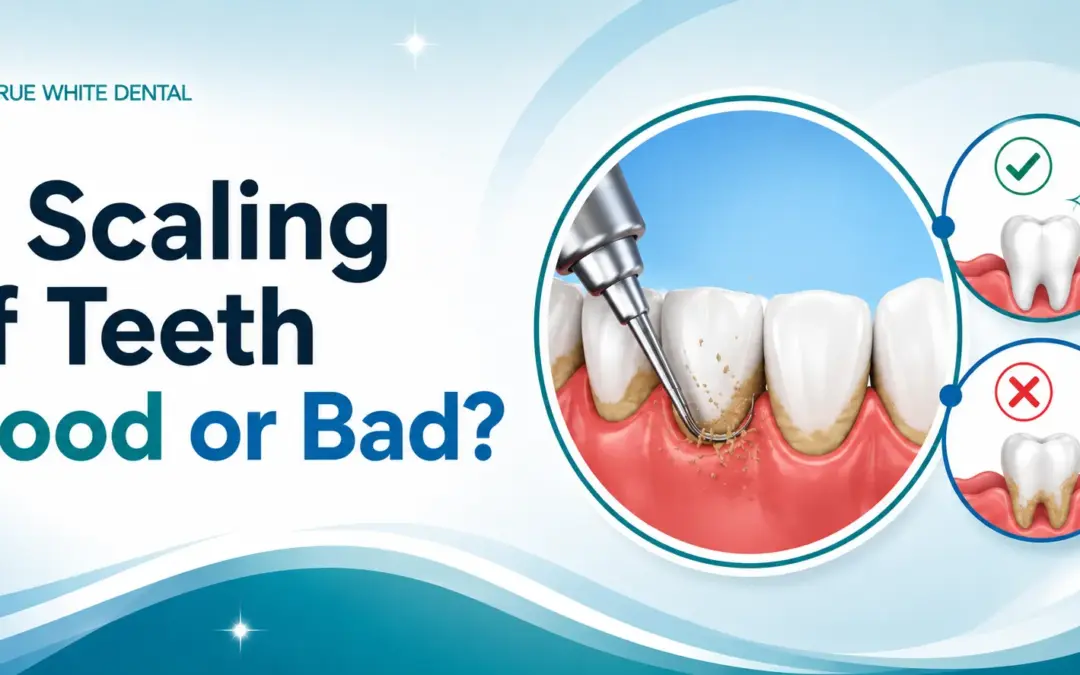
Scaling is a method of cleaning done professionally by dentists that involves the removal of plaque and tartar from the teeth and along the gum line. Tartar is hard plaque and therefore cannot be removed through brushing or flossing. The dentist has to use special tools to remove it.
It Targets Buildup, Not Healthy Enamel
Scaling devices are made to eliminate any tartar buildup on the surface of the teeth. The healthy enamel below is untouched by the procedure.
It Reaches Areas a Toothbrush Cannot
Plaque builds up beneath the gum line and between the teeth, in the spaces behind the back molars. Scaling cleans these areas very well.
It Is Usually Followed by Polishing
Following scaling, polishing of the tooth surface helps in making it smooth and removing small surface stains, thereby preventing the adhesion of fresh plaque.

Common Myths About Scaling, and Why They Are Wrong
Myth: Scaling Wears Down Tooth Enamel
It’s the most frequently cited myth about scaling, but it’s not true. Scaling takes off the tartar deposits that sit on top of your enamel and does not remove the enamel itself. Any roughness you might feel after the procedure is probably due to exposure of the natural tooth surface.
Myth: Scaling Loosens Teeth
In fact, the exact opposite takes place. Tartar formation beneath the gum line leads to the development of gum disease; it is this that loosens the teeth. Scaling removes the tartar from beneath the gum line, allowing the gums to adhere to the tooth more effectively.
Myth: Scaling Creates Gaps Between Teeth
When there is inflammation in the gums beforehand, the inflamed tissue may be trapped and swollen between the teeth, causing the teeth to look closer than they really are. But once scaling removes the inflammation, the gums will go back to their normal form and may cause those spaces that were previously hidden to become visible.
Myth: Scaling Should Be Avoided If Teeth Are Sensitive
Some people do experience sensitivity, which is slight and temporary for a few days after the scaling procedure, especially if there is a large amount of tartar accumulated under the gumline. This is only temporary and is certainly less worrying than not addressing the problem at all because it will lead to gum disease and tooth loss.

Who Benefits Most From Regular Scaling?
Scaling is not just necessary for people who have visible tartar. This procedure is suggested as a preventative measure for most people, especially when you have:
Bleeding Gums While Brushing
This is usually the first indication of gum infection resulting from the presence of plaque and tartar along the gum line.
Persistent Bad Breath
One of the most frequent causes of halitosis is bacteria that is lodged within tartar deposits.
Visible Yellow or Brown Deposits Near the Gum Line
Tartar, appearing yellow or brown, once hardened, cannot be brushed off and requires professional cleaning.
A History of Gum Disease
Individuals who have had previous gum disease will require scaling more regularly because it can prevent the disease from recurring. At times, extra gum treatment may be required in addition to the scaling procedure.

Is Scaling Safe for Everyone?
Scaling is a normal part of dental care for most people and is quite safe. Before the procedure, a dentist will carry out an examination of your gums, the level of tartar in your mouth, and any other related conditions. For people with gum disease or very sensitive teeth, the dentist can make changes to the treatment.
Where there is a tooth that is decayed or has a filling that has become weakened, the dentist may advise that the tooth be examined to see if it needs dental fillings or crowns along with scaling.
How Often Should You Get Your Teeth Scaled?
Generally, scaling is advised every six months for the sake of regular dental examinations by most dentists. People with a medical history of gum disease, excessive deposits of tartar, or people who are smokers require scaling more frequently. A recommendation for the frequency of visits will be given by your dentist based on your gum condition and will not follow any universal guideline.
Teeth cleaning and scaling are among the most efficient methods to prevent gum diseases from developing.

Our Verdict on Teeth Scaling
Scaling is good for your teeth when it is done by a qualified dentist with the correct technique. According to Dr. Medasani Roshny, it cleans away buildup that is hard to reach by brushing, prevents your gums from getting sick, and even stops the loss of your teeth and other enamel problems caused by tartar. Those myths usually refer to the symptoms of the problem that caused the tartar in the first place.
The American Dental Association says that proper cleaning of tartar and plaque from your teeth should be done regularly.
Frequently Asked Questions
Does scaling damage tooth enamel?
Can scaling make teeth loose?
Why do my teeth feel sensitive after scaling?
Will scaling create gaps between my teeth?
How often should I get scaling done?
Is scaling painful?
Disclaimer: This blog compares typical cost ranges for general information only. Actual pricing depends on individual case complexity and clinical assessment, and should not be used as a substitute for a personalised quote from a qualified orthodontist.