
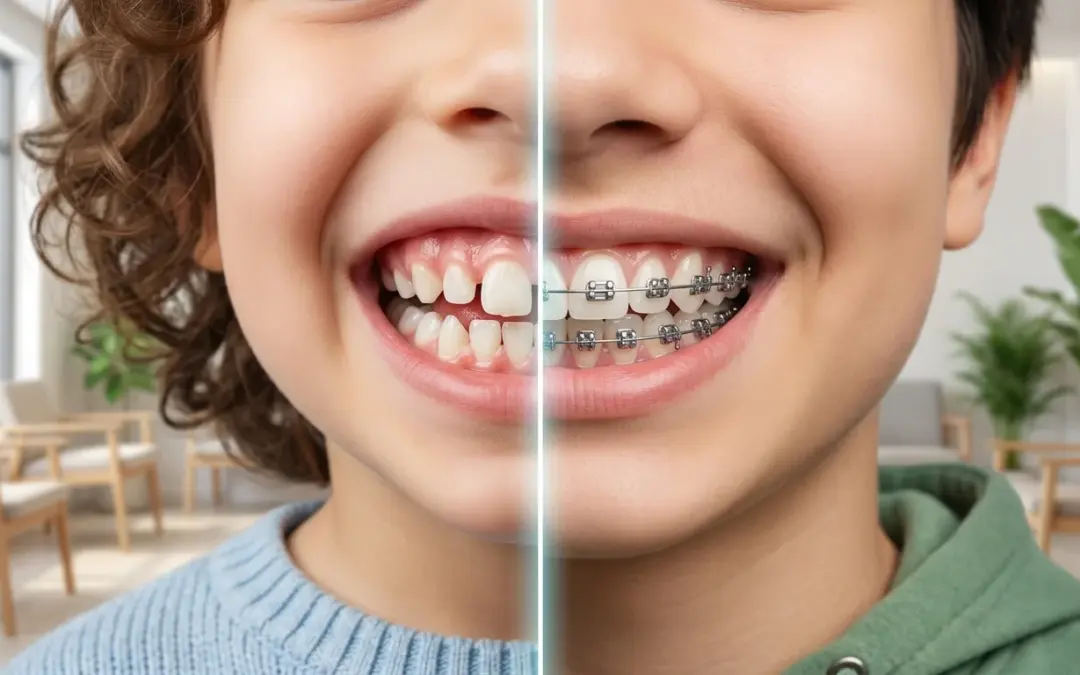
Most dentists suggest a first look by around age seven. Not because treatment begins that early, but because hidden bite and jaw issues are easiest to catch then. Full treatment, braces or aligners, usually starts later, somewhere between ten and fourteen, once most permanent teeth have settled in. But no single age tells the whole story. Growth patterns do.
According to Dr. Medasani Roshny at True White Dental, a trusted Dental Clinic in Kondapur, “There’s no single magic age for braces. It really comes down to how the jaw’s growing and where the teeth are headed. An evaluation by seven lets us catch problems early, while there’s still room to guide growth instead of just fixing it later.”
Ready to schedule your child’s orthodontic evaluation?
How Do You Spot the Right Time for an Evaluation?
Age isn’t the only marker here. Here’s how the timeline usually plays out.
| Age Range | What Happens | What to Expect |
| 6 to 7 years | Front teeth and first molars replace baby teeth | Ideal window for a first orthodontic evaluation |
| 8 to 10 years | Mixed dentition continues, crowding or bite issues become visible | Monitoring visits track jaw and tooth development |
| 10 to 13 years | Most permanent teeth erupt, growth spurt begins | Common stage to start full braces or aligners |
| 14 years and up | Jaw growth slows, permanent dentition complete | Treatment still works, but usually takes longer |
Beyond age, a few physical signs are worth watching for on their own.
Early or Late Tooth Loss: when baby teeth fall out way ahead of schedule, or hang on too long, it usually points to a bite issue underneath.
Crowded or Gapped Teeth: teeth that overlap, or leave big gaps, usually mean the arch just doesn’t have enough room.
Jaw Sounds or Shifting: clicking sounds, a jaw that shifts sideways, or a bite that lands off-centre. Get it checked.
Mouth Breathing or Thumb Sucking: keep these habits around long enough, and they’ll slowly reshape how the jaw and teeth grow.
So if any of this sounds familiar, don’t wait for the next scheduled check-up. Our orthodontic treatment team can map out the right timeline for your child.
Why Does Timing Actually Matter Here?
Timing decides what treatment can actually fix, not just how the results look.
Jaw Growth Window: treating while the jaw’s still growing means guiding it, not forcing it later.
Fewer Extractions Later: catch the crowding early, and sometimes teeth don’t need to come out at all.
Shorter Treatment Phases: early correction often means shorter, simpler stages. Less time in braces overall.
Confidence During Growing Years: straighter teeth sooner can ease the speech and social side of a poor bite too.
Parents often assume older kids need less time in braces. Usually it’s the reverse.
Get the timing right, and outcomes usually follow. If you’re weighing braces against clear aligners for a teenager, our guide on braces vs aligners breaks down the difference.
Why Choose True White Dental for Root Canal Treatment ?
True White Dental in Kondapur, Hyderabad treats orthodontic care as a growth-focused process rather than a fixed age-based checklist. Every evaluation looks at jaw development and tooth eruption timing before any treatment plan is suggested, so children are never rushed into appliances before they’re actually needed. The approach stays measured and unhurried, with clear explanations for parents at each stage, and a dedicated team keeping check-ups on schedule so nothing about a child’s growth gets missed.
Frequently Asked Questions
What age should a child first see an orthodontist?
Age seven is when most kids should get their first orthodontic evaluation or check-up.
Does early orthodontic treatment always mean braces right away?
Not always. It’s mostly about tracking growth, not starting treatment right away.
Can adults still get orthodontic treatment later in life?
Yes, adults can start anytime, though treatment usually takes a bit longer.
What happens if orthodontic treatment starts too late?
Wait too long, and it often means more crowding, extractions, or longer correction.
Disclaimer: This blog is for general informational purposes only and does not replace professional dental advice, diagnosis, or treatment.