
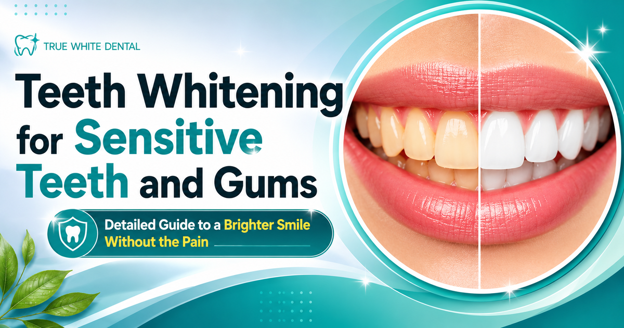
Many people in Kondapur dream of a brighter, whiter smile, yet those with sensitive teeth or tender gums often worry that whitening means choosing between a good-looking smile and staying comfortable. The good news? Sensitivity doesn’t have to hold you back. With the right assessment, whitening can be done safely even for sensitive teeth and at True White Dental, Kondapur, that’s exactly what we specialise in.
Ready to stop blaming your chai habit for your smile? Discover whitening that works around sensitivity, not against it.
How True White Dental Whitens Sensitive Teeth Safely
How Whitening Agents Work
Whitening treatments use peroxide-based gels that pass through the outer enamel to break down stains. While effective, this can briefly open tiny channels in the enamel, called dentinal tubules, that lead to the nerve, which is what causes the short, sharp sensitivity some people feel during or after whitening.
When Dentin Is Exposed
If the enamel is already worn thin, or gum recession has left part of the softer layer underneath exposed, these channels sit

much closer to the surface. Whitening agents then reach the nerve more easily, so sensitivity becomes more noticeable unless the treatment is adjusted.
Gum Irritation and Pre-Existing Issues
Bleaching gel touching the gums can cause temporary redness and soreness. In a clinic, gum barriers and custom trays protect the soft tissue that shop-bought strips simply can’t offer. Untreated cavities, cracked teeth, worn fillings, or active gum disease can all heighten sensitivity, which is why a proper check-up always comes first.
Signs of Sensitive Teeth to Watch For Before Whitening
A few everyday clues tell us your teeth may need a gentler approach. Wincing at hot chai or ice cream points to exposed nerve pathways. Discomfort from sweets or acidic foods like citrus, tamarind, or fizzy drinks can signal softened enamel. Tenderness while brushing along the gum line may mean recession or worn enamel, while gums that bleed or feel sore suggest inflammation that should be settled before any whitening begins.
Can People with Sensitive Teeth Still Whiten Safely?
Yes, sensitive teeth don’t rule out whitening. What they need is a proper assessment so the cause and degree of sensitivity can be understood and the treatment planned around it. At True White Dental, Dr. Medasani Roshny carries out a detailed review before recommending any approach.
Often, the sensitivity itself is treated first, perhaps a filling, fluoride therapy to strengthen enamel, or care for an affected tooth, before whitening is introduced. Using a lower concentration of gel over a longer period gives lovely results with far less discomfort, and desensitising agents like potassium nitrate and fluoride are applied before or after to calm the nerve. These are simply not options with one-size-fits-all home kits.
Clinically Safe Whitening Options at True White Dental
In-Clinic Professional Whitening
Prescription-strength gel is applied by a trained professional with gum barriers in place to protect the soft tissue. The treatment is carefully timed and monitored, and results are usually visible in a single session.
Low-Concentration Take-Home Trays
Custom trays moulded to your teeth are filled with a gentler gel and worn for short intervals over a few weeks. This gradual approach suits sensitive teeth and lets you pace your treatment, with a snug fit that keeps gel off the gums.
Desensitising and Fluoride Support
Desensitising gels block pain signals through the dentinal tubules, and fluoride strengthens enamel over time. We routinely build these into whitening for sensitive patients.
Alternatives for Severe Cases
Where sensitivity is severe, or enamel is significantly compromised, veneers or bonding can create a beautifully whiter look without any bleaching at all, both available as part of our smile design services.
How Daily Habits Influence Sensitivity and Staining
Regular chai, filter coffee, and acidic drinks like nimbu pani contribute to both staining and enamel erosion. The tannins yellow the teeth while the acidity softens enamel and raises sensitivity. Whitening toothpastes can help with surface stains, but used too vigorously or too often, they wear enamel down. A quick word with your dentist about the right products and brushing technique protects both your whiteness and your comfort.

When to Seek Immediate Dental Attention
Some sensitivity after whitening is normal and settles within a day or two. But do call us promptly if you notice sharp pain lasting more than two to three days, gum redness, swelling or white patches, pain spreading to the jaw or head, sensitivity that doesn’t ease with desensitising toothpaste, or a loose filling after treatment.
Ready to see your smile without years of staining holding it back? Get a whitening plan built around your teeth, your sensitivity, and your comfort at True White Dental.
Frequently Asked Questions
Can I whiten my teeth if I have sensitive teeth and gums?
Yes, with the right preparation. A clinical assessment identifies the cause and degree of sensitivity, after which a suitable protocol, lower concentration, desensitising pre-treatment, and gum protection is chosen.
Does teeth whitening damage enamel?
Professional whitening at the correct strength and duration does not cause permanent damage. Enamel hardness recovers within a day or two. It’s incorrect, excessive use of home products that tends to cause problems.
How long does whitening sensitivity last?
Most sensitivity settles within 24–72 hours. A desensitising toothpaste beforehand and avoiding temperature extremes afterwards helps shorten it.
Which whitening method is safest for sensitive teeth?
Low-concentration take-home trays used under clinical supervision are generally the gentlest option, though in-clinic whitening with gum barriers suits many patients too.
Can whitening be done with receding gums?
It depends on the degree of recession. Mild cases can be managed with careful application and gum barriers; more significant recession may need gum therapy first, or an alternative like veneers.
How long do professional whitening results last?
Typically, one to three years, depending on diet, habits, and oral hygiene. Regular cleaning, limiting staining foods, and occasional touch-ups all help maintain your results.
References:
- Root Canal Treatment – American Association of Endodontists (AAE)
- Root Canals – Cleveland Clinic