
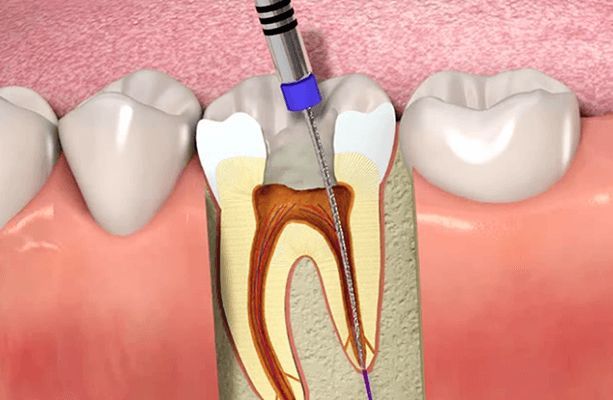
The procedure is carried out under local anaesthesia, which keeps the tooth and surrounding area numb throughout, so the experience is closer to a deep filling than to anything alarming. In reality, the discomfort people associate with a root canal comes from the infected or inflamed nerve beforehand, and the treatment is precisely what relieves it. Any mild soreness afterwards usually lasts only a day or two and is easily managed with over-the-counter painkillers.
According to the specialists at True White Dental, one of the best dental clinics in Kondapur,
“The discomfort patients remember is almost always the toothache that brought them in, not the treatment itself. With proper anaesthesia and modern rotary instruments, a root canal today is a routine, well-tolerated procedure, and most patients are surprised by how little they actually feel.”
Putting off treatment because you’re worried it’ll hurt?
Why Root Canals Got Their Painful Reputation?
The fear is mostly inherited from a time before modern dentistry, and from a simple mix-up about where the pain comes from.
- Old techniques: Decades ago, root canal treatment relied on slower manual tools and weaker anaesthesia, so the process was longer and less comfortable. Dentistry has moved well past that.
- The pain came first: Most people needing a root canal already have a throbbing toothache from an infected nerve. They link that pain to the treatment, when the treatment is actually what ends it.
- Fear travels faster than facts: “Painful as a root canal” became a common phrase long before the techniques improved, and the reputation stuck around.
- Numbing is standard: The tooth is fully anaesthetised before any work starts, so you feel pressure and movement at most, not sharp pain.
The fear stems from outdated methods rather than the treatment itself, which today is a controlled, comfortable procedure aimed at resolving pain rather than causing it.
What Does Root Canal Treatment Actually Feels Like?
Once the tooth is numb, the appointment is far less dramatic than people expect. Here’s roughly how each stage feels.
| Stage | What You Feel | Why |
| Local anaesthesia | A small pinch, then numbness | The area is numbed before any drilling begins |
| Removing the infection | Pressure and vibration, no sharp pain | The nerve causing the pain is cleaned out |
| Cleaning and shaping | Mild pressure | Canals are disinfected and shaped |
| Filling and sealing | Little to nothing | The space is sealed to prevent reinfection |
| After the appointment | Mild soreness for 1 to 2 days | Tissues settle, eased with regular painkillers |
- During: You stay numb the whole time, so most patients describe it as boring rather than painful.
- Right after: Tenderness when biting is common for a day or two and responds well to over-the-counter pain relief.
- Protecting the tooth: A treated tooth often turns brittle, so a dental crown is usually placed afterwards to stop it from cracking.
- When to call: Severe or worsening pain after a few days isn’t normal and should be checked, though it’s uncommon.
If the pain you’re feeling is sharp and triggered by hot or cold rather than constant, it might be something else entirely. Our guide on tooth sensitivity covers when that’s the more likely cause.
Why Choose True White Dental for Root Canal Treatment ?
True White Dental in Kondapur, Hyderabad focuses on making root canal treatment as comfortable as possible, with thorough anaesthesia and a calm, unhurried approach. Each step is explained before it happens, so there are no surprises in the chair, and the priority stays on saving the natural tooth rather than rushing to extraction. The aftercare guidance is clear too, so you know exactly what’s normal and what isn’t once you’re home.
Frequently Asked Questions
Is a root canal more painful than a filling?
Not really. Because the tooth is numbed the same way, most people find a root canal feels similar to a deep filling, just a bit longer.
How long does the pain last after a root canal?
Mild soreness usually lasts one to two days and settles with over-the-counter painkillers. It should steadily improve, not get worse.
Can I drive home after a root canal?
Yes. Local anaesthesia doesn’t affect alertness, so you can drive and return to most normal activities the same day.
Why does my tooth still hurt after a root canal?
Some tenderness is normal while the tissues heal. Persistent or increasing pain after a few days should be reviewed, as it may need a quick follow-up.
Do I need a crown after a root canal?
Often yes. A treated tooth can become brittle, and a crown protects it from cracking so it lasts for years.
References:
- Root Canal Treatment – American Association of Endodontists (AAE)
- Root Canals – Cleveland Clinic